The Price of Staying Well: What Discount Cards and the New Medicare Rules Actually Mean for Your Quetiapine Bill

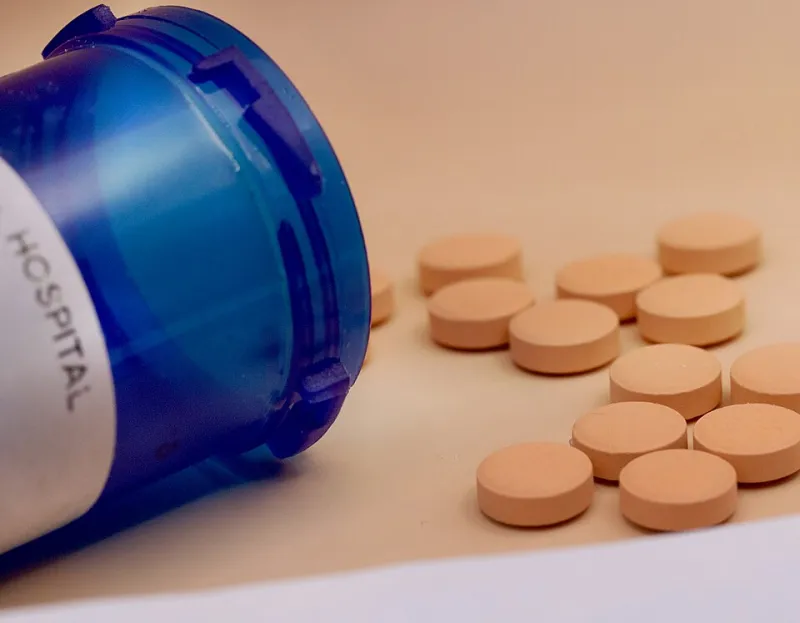
Photo: person comparing prescription drug prices on smartphone at pharmacy counter with medication bottle, via www.kevinashleyphotography.com
There is a particular ritual now familiar to millions of Americans with a psychiatric prescription: standing at the pharmacy counter, hearing the price, and pulling out a phone to check GoodRx before deciding whether to fill it. For quetiapine patients, that ritual has become routine. Generic quetiapine is one of the most prescribed antipsychotics in the country, and its cash price can swing wildly—sometimes under $15 with a discount card, sometimes north of $100 at the same pharmacy chain a mile away.
I want to argue something uncomfortable: the discount-card revolution has made psychiatric medication cheaper, but it has not made it simpler, and in some cases it has made treatment worse.
The Discount Card Shell Game
GoodRx, SingleCare, and pharmacy discount programs negotiate prices that sit outside insurance entirely. For an uninsured patient, they are genuinely lifesaving. But here is what the apps do not advertise: the price you see is valid only at specific pharmacies, for specific quantities and dosages, and it can change overnight. A patient who builds their monthly budget around a $12 price may find it is $38 next refill. Worse, prices for the extended-release formulation—which many bipolar patients take—remain dramatically higher than the immediate-release version, and discount cards cover the two very differently.
There is also a subtle clinical hazard. Because prices vary by pharmacy, patients are incentivized to fill prescriptions wherever it is cheapest, which fragments their refill history across multiple locations. That fragmentation makes it harder for any single pharmacist to catch dangerous interactions—say, quetiapine combined with a new sedative from a different prescriber.
The 2025 Medicare Redesign: Real Relief, New Puzzles
The Inflation Reduction Act's Part D overhaul, fully in effect since 2025, did two important things: it capped annual out-of-pocket drug spending at $2,000, and it replaced the old coverage gap—infamously, the "donut hole"—with a smoother benefit structure. For Medicare beneficiaries taking expensive brand-name medications, this is a genuine improvement.
But quetiapine is generic, and generics are cheap—until they are not. Beneficiaries on high-deductible plans can still face several hundred dollars of early-year spending before coverage kicks in. And the $2,000 cap, while welcome, is phased across the year; a patient whose January refill costs more than expected may still ration in the short term.
Rationing Is a Treatment Decision Made by the Wrong Person
Here is the part of this story that should make clinicians uneasy. Surveys of patients on psychiatric medications consistently find that a meaningful share skip doses, cut pills in half, or stretch a supply to delay a refill—not because of side effects, but because of cost. With quetiapine, abrupt dose reduction is not a benign money-saving strategy. It can trigger withdrawal effects, rebound insomnia, and, in patients with bipolar disorder or schizophrenia, symptom relapse that lands them in the emergency department at a cost far exceeding a year of medication.
If you are rationing, do not simply stop. Bring the problem to your prescriber. There are safer alternatives to talk through:
- Switching to immediate-release quetiapine if clinically appropriate, which is dramatically cheaper than ER formulations.
- A 90-day supply through mail order, which typically cuts per-pill cost substantially.
- Manufacturer and state assistance programs, including State Pharmaceutical Assistance Programs in many states.
- A formulary exception or therapeutic alternative—another generic antipsychotic may treat your condition at a fraction of the cost.
- Asking the pharmacist directly to run every available discount option; they often know which combination is cheapest this month.
Transparency Is Not the Same as Affordability
Discount apps deserve credit for exposing the absurdity of American drug pricing—the same pill, three prices, chosen at random by whoever negotiated last. But exposure is not reform. The honest takeaway for quetiapine patients in 2025 is this: the tools to pay less exist, but using them safely requires treating price-shopping as a conversation with your care team, not a private struggle. Your prescriber cannot help with a cost problem they do not know about. Tell them. That single conversation is, pound for pound, the most valuable discount available.