One Pill, Two Price Tags: What to Expect When Your Pharmacy Switches You from Seroquel to Generic Quetiapine
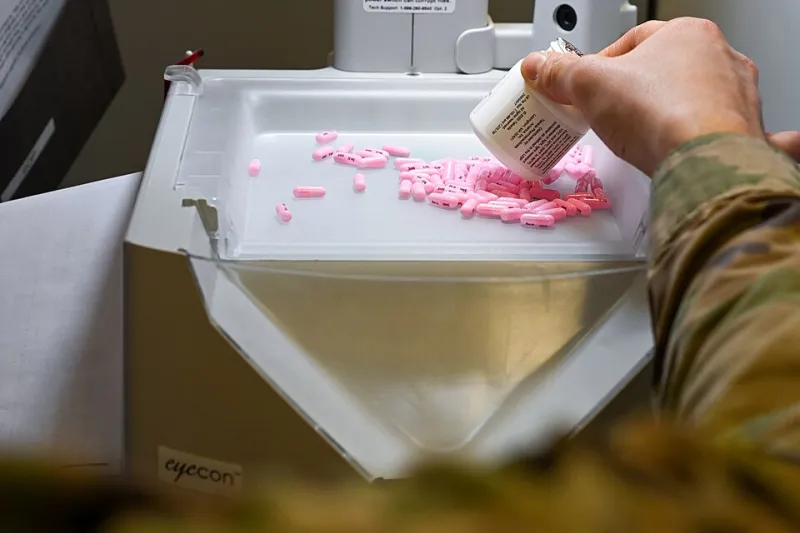
Photo: U.S. Air Force photo by Senior Airman Jessica Sanchez-Chen, Public domain, via Wikimedia Commons
For years, your prescription label said one thing: Seroquel. Then, after a routine refill, you noticed the bottle looked different. The manufacturer's name had changed, the tablets were a different shade, and the price had dropped. Your pharmacist may have mentioned the word "generic" in passing. Now you have questions—and they are legitimate ones worth exploring.
The Same Ingredient, But Not Always an Identical Experience
Generic quetiapine and brand-name Seroquel both deliver the same active medication, and the US Food and Drug Administration requires generics to demonstrate bioequivalence before approval. In practical terms, that means a generic must reach your bloodstream at a rate and extent within a narrow range of the original product.
However, bioequivalence is not the same as identicalness. Inactive ingredients—binders, coatings, colorants, and fillers—can vary between manufacturers. These components do not treat your condition, but they can influence how quickly a tablet dissolves or how your body tolerates it. For a medication like quetiapine, where timing of absorption matters for sedation and symptom control, some patients genuinely report changes in how they feel after switching, particularly with extended-release formulations.
Why Extended-Release Products Deserve Extra Attention
If you take the once-daily extended-release version, the switching conversation becomes more nuanced. Extended-release technology is a formulation science, not just a chemical one. Different manufacturers use different delivery systems to release the drug gradually, and the FDA's bioequivalence window, while strict, allows for some variation.
Most patients switch without issue. A smaller group reports changes in side effects—more morning grogginess, different sleep patterns, or shifts in how well symptoms are controlled. If this happens to you, the most important step is documentation rather than assumption.
The Financial Reality: Why Your Pharmacy Made the Switch
Insurance formularies, not pharmacies, usually drive generic substitution. Most US health plans place brand-name Seroquel on a higher tier or require prior authorization, meaning generic quetiapine may cost you a few dollars per month while the brand could run into the hundreds without coverage. AstraZeneca's patent on the compound expired years ago, and the brand is now prescribed far less often.
If cost is not a concern for you and you prefer the brand, that preference is worth stating clearly. Some plans will cover the brand name with a physician's letter documenting a medical necessity. Others will not. Your pharmacist can often tell you within minutes what your specific plan allows.
A Practical Script for Raising Concerns
Approaching your care team about a switch does not need to be adversarial. Consider this framework:
- Describe specifics, not generalities. "Since the switch, I've been waking at 4 a.m. and my intrusive thoughts have returned in the evenings" gives your prescriber far more to work with than "the generic doesn't work."
- Ask which manufacturer you received. Generic products come from multiple makers, and pharmacies sometimes stock different ones month to month. Consistency may resolve the issue on its own.
- Request consistency. Ask your pharmacist to flag your profile so refills come from the same manufacturer whenever possible.
- Give it a defined window. Prescribers often suggest monitoring for two to four weeks before judging a new formulation, unless symptoms worsen significantly sooner.
- Escalate thoughtfully. If problems persist, your doctor can document a rationale for brand-name coverage or adjust your regimen.
What Not to Do
Never adjust your dose on your own to compensate for how a new formulation feels. Quetiapine requires careful titration, and self-directed changes can trigger withdrawal effects, symptom recurrence, or excessive sedation. If something feels wrong, the answer runs through your prescriber or pharmacist—not your pill splitter.
The Bottom Line
For the vast majority of patients, generic quetiapine is a safe, effective, and dramatically more affordable substitute for Seroquel. But "most patients" is not "every patient," and your experience deserves to be heard. Track what changes, speak with specificity, and use the professionals on your care team. Affordable treatment and effective treatment should not be competing goals—and with informed advocacy, they don't have to be.